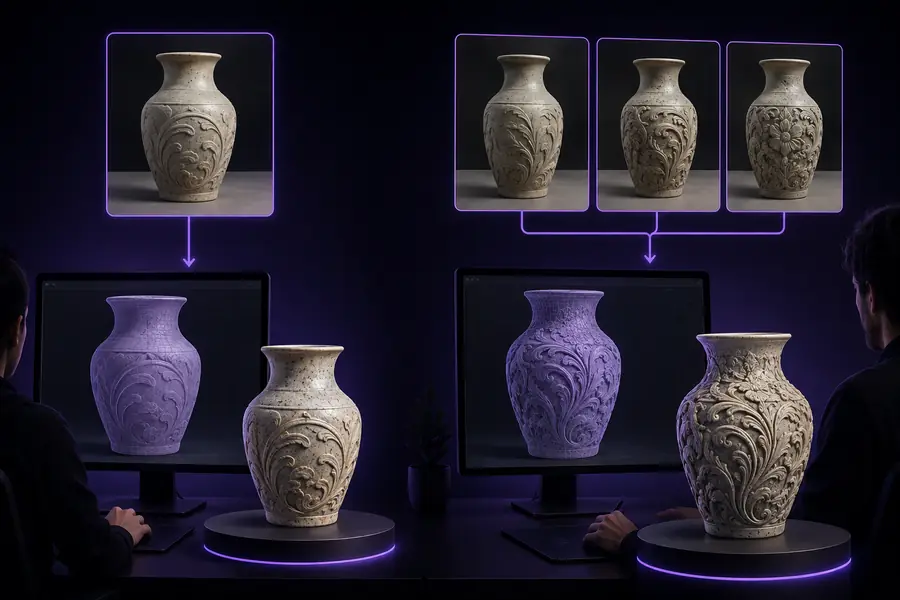
Image reconstruction

Build faster with hyper3d image to 3d from a single reference

hyper3d image to 3d is the focused Hyper3D entry point for turning one visual reference into a starting 3D asset. It keeps the workflow simple: upload, generate, inspect, and refine.

1
reference image to begin
3
core actions in the workflow
1
editable 3D starting point
Hyper3D image-based 3D reconstruction workflow

Choose the right route

This entry point vs the general Hyper3D route

The image route is narrower than the general platform: it is designed for a clear visual reference, not every possible 3D creation task. Use the comparison below to set expectations.

First-time 3D creator

You have a product photo, prop image, or concept reference and need a fast starting mesh without learning traditional modeling first.

Begin with the dedicated image workflow, then use the result as a blockout for a more detailed scene. Read what is hyper3d for a plain-language overview.

what is hyper3d

Online design reviewer

You need to test whether a visual idea can become a usable 3D form before opening a full desktop modeling package.

Use Hyper3D online to create a quick visual checkpoint, compare the silhouette, and decide whether the concept deserves more work.

hyper3d online

Game asset planner

You are collecting early props from reference images and want consistent rough assets for layout, scale checks, or pitch scenes.

Generate a rough object first, then follow a structured Hyper3D workflow to inspect topology, materials, and export readiness.

how to use hyper3d

Visual merchandiser

You need a simple 3D approximation of a physical item for a moodboard, product walkthrough, or spatial composition.

Choose a well-lit image with a clear outline and treat the output as a presentation aid rather than a final production model.

the online Hyper3D workspace

Core actions

The 3 things only this image route does

This focused Hyper3D path has three practical jobs: read a reference, reconstruct a recognizable form, and give you a scene-ready starting point to inspect.

Upload one clear reference

Choose a front, three-quarter, or otherwise readable image with the subject separated from its background. Strong contours and visible details give Hyper3D better visual evidence.

Generate the first 3D form

The image-to-3D system estimates shape, depth, and surface structure from the reference. Treat the first result as a fast interpretation, not a guaranteed scan.

Inspect and move forward

Check the silhouette, proportions, underside, and small features. Keep the useful parts, then refine, retopologize, texture, or export in the next stage of your workflow.

Plan the run

How to start with one image

Use this lightweight estimate to think about review effort as your reference set grows. It is a planning model, not a quote or a promise of exact processing behavior.

Estimated working size
MB
Estimated compute cost
relative units
Manual setup time saved
minutes

Set expectations

Limits of the image route

Hyper3D can accelerate the first pass, but a single picture leaves important information unknown. Knowing the gaps helps you decide when to refine manually or capture better references.

Hidden sides are inferred

A single image does not reveal the back, underside, or fully occluded parts of an object. The generated form may be plausible without being accurate in those areas.

WorkaroundSupply a clearer angle or several complementary views when the unseen surfaces matter.

Thin details may disappear

Handles, wires, blades, sharp rims, and other narrow features can be softened, merged, or omitted during reconstruction.

WorkaroundModel fragile details separately after the base shape is generated.

Materials are not guaranteed to match

The result can suggest color and surface character, but it should not be treated as a calibrated material scan or a final texture set.

WorkaroundReplace rough materials with deliberate textures, UVs, and lighting in your target application.

Topology may need production cleanup

A recognizable mesh is not automatically optimized for deformation, subdivision, animation, or real-time performance.

WorkaroundInspect polygon flow and use retopology, decimation, or manual cleanup before shipping the asset.

Quick answers

FAQ for this image route

These short answers cover the questions people usually ask before trying a Hyper3D image workflow.

Can the route start from one image? Yes, when the subject is clear and visually separated.
Yes
Which reference works best? A sharp, well-lit view with a complete visible outline.
Best
Is the output production-ready? Usually not; inspect topology, hidden surfaces, and materials before final use.
Rough first pass
What should happen next? Review the silhouette, refine weak areas, and move the asset into your normal 3D pipeline.
Iterate